Integrated Digital Therapy™ - IDT™
CONNECTING YOUR DIGITAL LIFE WITH WHAT MATTERS MOST TO YOU
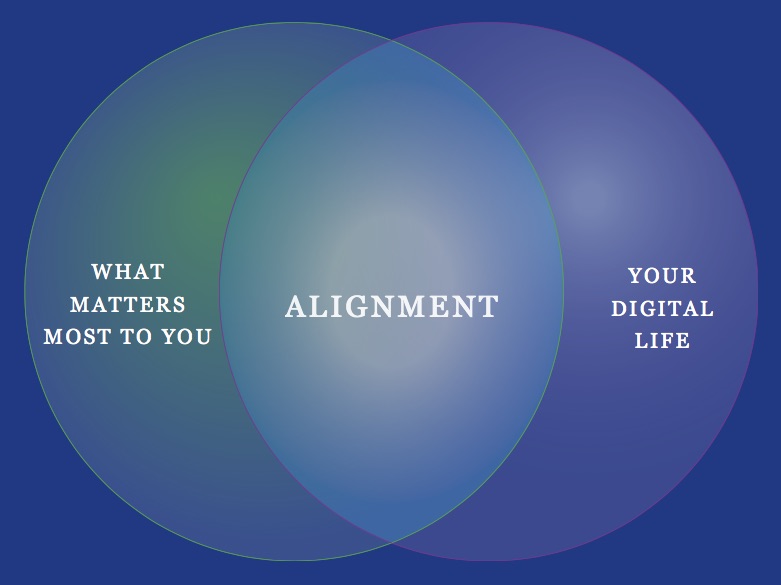
Your digital life is the way you engage with and experience technology throughout everyday life across relationships, communication, work, learning, creativity, entertainment, daily activities and more.
What's Shaping Your Digital Life?
Technology has quickly become part of nearly every area of our lives. Life is busy, and technology often seems to make things easier, faster, or more convenient.
Over time, it can become a bigger part of how we spend our time and attention.
As more of everyday life becomes digital, how do we make sure there's room for everything else that matters to us?
IDT™ gives you a way to understand what's shaping your digital life and explore what you can do if it's getting in the way of the things that matter most to you.
What Matters Most To You
Your digital life is the way you engage with and experience technology throughout everyday life across relationships, communication, work, learning, creativity, entertainment, daily activities and more.
Integrated Digital Therapy™ begins with what matters most to you and explores how your digital life aligns with those things.
The way you use your devices is not just about habits or willpower. It is shaped by what you are feeling, what you need, and by systems designed to capture and hold attention.
The Digital Life Assessment
The Digital Life Assessment gives you a chance to reflect on different parts of your digital life and how they relate to what matters most to you.
It can help you notice your current patterns and whether there are areas you want to look at more closely.
It also explores importance, confidence, and readiness for change. What you identify helps guide where you and your therapist begin and what may be useful to explore.
IDT™ Begins by Asking:
- Does my current device use support what matters most to me?
- Does my current device use interfere with what matters most to me?
- When my relationship with my devices is aligned with what matters most to me, what does that look like?
MORE THAN A STARTING POINT
The things that matter most to you remain at the center of the IDT™ process.
If You Decide You'd Like To Make Changes
If you notice that the way you are engaging with technology is affecting other parts of your life and the things that matter most to you, you may decide you want to explore other options. IDT™ helps you understand more about what may be contributing to what is happening and gives you different areas to explore as you decide what may be useful for you.
LEVEL 1 — EMOTIONAL TRIGGERS & REGULATION Emotional experiences, life experiences, and past experiences can all play a role in when and how you turn to your devices. IDT™ helps you explore what may be happening in those moments, what the device may be doing for you, and how experiences such as anxiety, grief and loss, depression, loneliness, boredom, shame, addiction, trauma and more may be connected to your device use. From there, you can explore additional ways to manage difficult feelings and experiences.
LEVEL 2 — DATA, PRIVACY & DIGITAL INFLUENCE Your digital life also includes what happens with your information and how digital systems work. IDT™ helps you build hands-on understanding of data, privacy, and interconnected systems, including AI tools, search engines, and apps, and the ways they can influence engagement. You can then explore practical changes to settings, permissions, tracking, and personalization that can reduce how much information these systems use to shape what you see and lessen some of the pull designed to keep you engaged.
LEVEL 3 — PLATFORM DESIGN & INTENTIONAL USE Platforms, apps, games, and streaming services use specific design features to keep you engaged, such as infinite scroll, autoplay, notifications, likes, streaks, and rewards. IDT™ helps you recognize which features pull you in most, understand how they are designed to keep you engaged, and explore changes that can reduce that pull and support more intentional use.
THE WORKBOOK IS NOT LINEAR
The three levels are not necessarily linear. What you identify through reflection and the Digital Life Assessment helps guide where you and your therapist begin. You may work with one level, move between levels, or return to different areas as the work unfolds.
Integration, Ambivalence & Maintenance
Integration: Bringing it Together
IDT™ brings together what you have learned about emotional patterns, data and privacy, digital influence, and platform design. From there, you can explore which strategies fit your life and what matters most to you.
IDT™ helps you bring these different parts of the work together into a plan that fits your life.
Ambivalence & Self-Compassion
Mixed feelings about change can be part of the process. When old patterns return, the focus is not on failure or doing it right. It is an opportunity to get curious about what happened, what you learned, and what may be useful moving forward.
IDT™ helps you explore ambivalence and respond to old patterns with curiosity and self-compassion rather than treating them as failure.
Maintenance & Support
Life changes. Technology changes. What matters most to you may change too. Maintenance includes checking in over time, noticing what is working, whether your digital life still aligns with what matters most to you, and what you may want to adjust.
IDT™ gives you a framework you can return to as your life, priorities, and technology change.
Progress In This Work
Progress is not defined by less screen time, perfect boundaries, or doing it right. It may look like feeling more choice in how you engage with technology, greater alignment between your device use and what matters most to you, or noticing changes that are meaningful to you.
IDT™ helps you recognize and define progress based on what matters most to you and the changes that are meaningful to you.
OLD PATTERNS CAN GIVE YOU NEW INFORMATION
When something returns, the work is not only about getting back on track.
It can also be a chance to notice what happened, what triggered it, and what might help next time.
How Integrated Digital Therapy™ - IDT™ is Used
Integrated Digital Therapy™ is a clinician-developed therapeutic modality. It integrates emotional and nervous system regulation, including attention to trauma, addictive patterns, and building practical coping skills, with motivational interviewing and stages-of-change informed work. It also draws on a clear understanding of how digital platforms are intentionally designed to capture and hold attention, and includes practical, hands-on changes to privacy and device settings to help reduce distraction.
This work is not about disengaging from technology. It is about understanding how technology fits with what matters most to you. Technology is deeply integrated into modern life. It supports connection, creativity, work, accessibility, and learning.
IDT™ is designed to be used collaboratively with your therapist.
The Digital Life Assessment explores what matters most to you, your current digital patterns, the discrepancy, a possible gap between what you want and what is happening, the costs and benefits of current device use, emotional patterns, and your understanding of how digital systems work. Your responses help identify which areas may be most useful to explore first and which parts of IDT™ may be most relevant to you. The assessment also helps you and your therapist understand how important different concerns feel to you, how confident you feel about making changes, and where you are in thinking about change. There is not one starting point or one path everyone follows. You and your therapist may begin in one area, move between different parts of the work, or return to something later as it becomes more relevant.
You decide what happens next.
The assessment is not about telling you what needs to change. It gives you and your therapist information to explore together. Some areas may feel important to you now. Others may become relevant later.
The workbook and assessment are designed to be used within an ongoing therapeutic relationship, at a pace that supports your goals, readiness, and emotional safety. If you are experiencing intense distress, thoughts of harming yourself, or feel unable to stay safe, it's important to reach out for immediate support from your therapist, a crisis line, or emergency services. IDT™ is not meant to address every form of distress connected to technology; for some experiences, different clinical interventions, additional supports, or other changes may also be needed.
WHAT ALIGNMENT MIGHT LOOK LIKE
IDT™ often includes something to notice, try, or practice between sessions.
Over time, these may become part of your normal routine and you may return to parts of the workbook as a resource.
© 2026 Atlanta Therapy Resources, LLC. Integrated Digital Therapy™ and IDT™ are proprietary terms used by Atlanta Therapy Resources, LLC. All rights reserved. Reproduction, distribution, or transmission requires prior written permission from Atlanta Therapy Resources, LLC.